1. As a musician, you work in a world where discipline, sensitivity and attention to detail are essential. How have your experiences in music, alongside your interests beyond the concert stage, shaped the person you are today?
Everything begins with a passion. It is small, persistent spark within that never truly goes out. Over time it shifts shape and direction, yet it remains there, propelling you forward to explore, to deepen your being, and ultimately to become what we call a professional. Music demands precisely the skills you mentioned, in order to master it: discipline, sensitivity, and attention to detail. These are transferable skills that I rely on- every single day. They do not happen simply, by chance. How we put them to work in life is shaped by much more- by our inner beliefs, to the environments we choose to inhabit. That is why I have always consciously chosen where and with whom I spend my time, what are my next steps, and how I can nurture my curiosity. It is about granting oneself the chance to enrich life with knowledge and, above all, with lived experience.
Only in this way do we become authentic individuals who naturally radiate sensitivity back into the world, notice subtle details, build beauty around us, and share it with others. And in return, all of those accumulated experiences flow right back, shaping how deep and authentic a musician you ultimately become. Here, I am speaking of high art. All these elements create precisely that. High art should not be considered as something unreachable. Rather as an invitation to pause, to delve inward, to question, to reflect, to hear, and to feel far beyond mere entertainment.
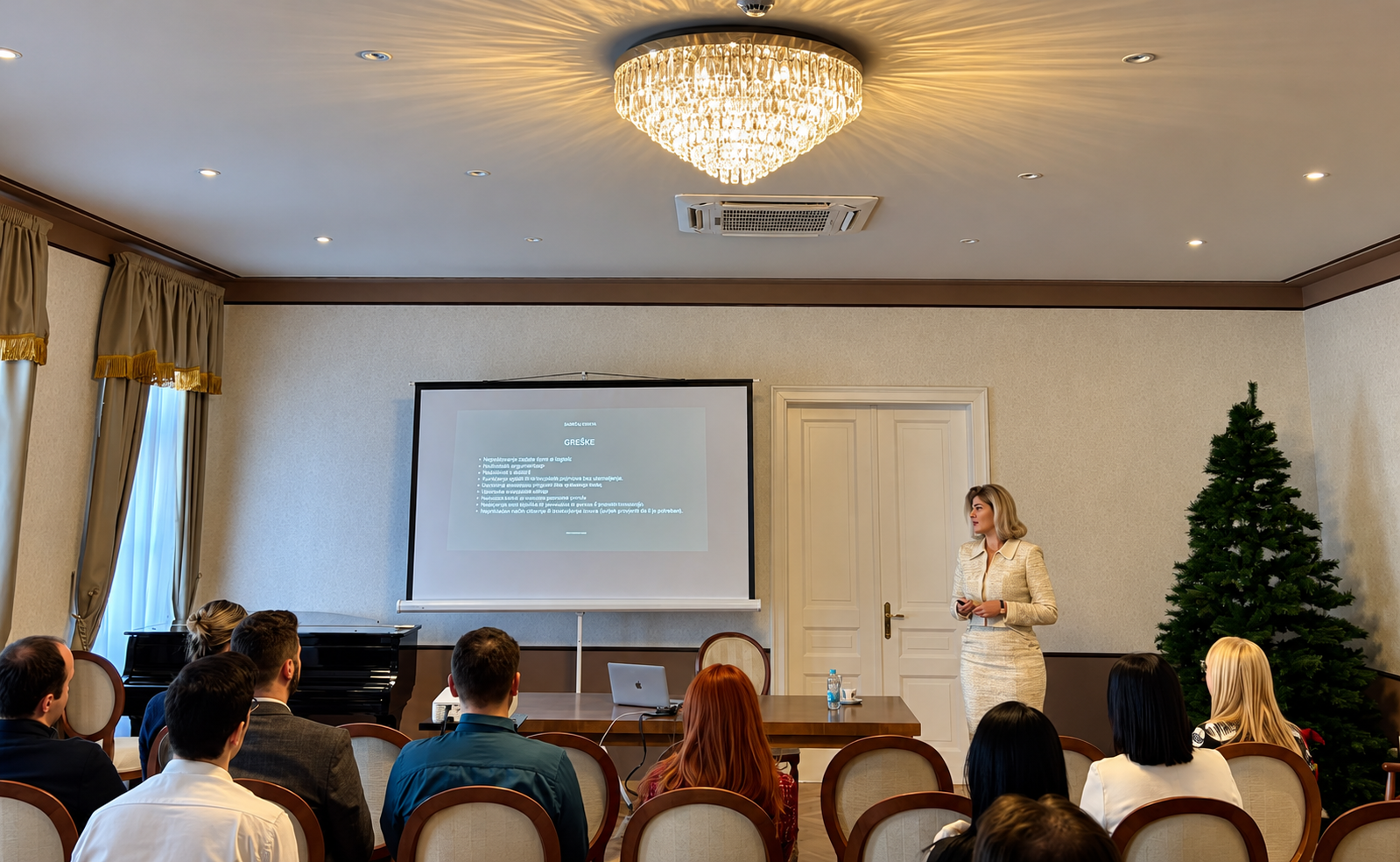
Today, music is so often perceived as something light, casual, and purely relaxing, whereas high art differs precisely in requiring curiosity- as an active choice to immerse oneself, to take the time to know it, to learn how to truly listen, and thereby deepen one's being on an entirely new level. This is what art has given me, and it is precisely what anyone who opens themselves up to it receives as well. It is also the foundation behind my educational work and my programme, The Art of Listening, designed to help non-musicians awaken this exact capacity in their everyday lives.
2. Etiquette is often reduced to a set of rules, yet at its heart lies an understanding of others. What does good etiquette mean to you, and which forms of social grace do you consider most revealing of a person’s character?
Etiquette shares the exact same principles as art- you learn the craft, understand the rules, and acquire the knowledge of what to do and when. Then, through a deeper understanding of life and its fluidity, you learn when and to what extent to honour those rules, and when to gracefully bypass them. At the root of both lies true knowledge, followed by a deeper comprehension. It gives us the opportunity to make conscious choices. And not simply because we can, or because we feel like it; in the moment (as so many do today, mistaking impulse for freedom), but because we possess the discernment to judge when and why a choice is truly right. To me, true, lived etiquette lies right there. It protects us from the anarchy of social behavior and elevates us above the average. Each of us decides where we want to place ourselves in life- the choice is always ours. For me, this kind of cultivated awareness reflects itself in an effortless grace. In people who move through life with a certain nonchalance, while carrying profound depth within. You feel it in conversation, in their ability to elevate their interlocutor, in the effortless gesture of letting someone pass before you, or in the way they introduce another person- without forced flattery, but with a genuine understanding of that person’s professional path, studied out of respect. Ultimately, this stems from a universal respect for human beings- a love that has transcended personal frameworks and limiting beliefs, liberating itself through the art of living well with others.